Alpujarra Discovery Gateway
Enter through place and time.
Discover Al-Andalus
Experience history through tradition, synergies, and the routes that still bind these cities together.
A practical reading guide through Iberia and Morocco, shaped by local insight, historical depth, and the wish to bridge the modern and traditional, the European and the Islamic worlds.
Route Chapter
Main Route Through Iberia
Enter through Madrid and Toledo, then continue into the core reading of Cordoba and Granada, before slowing into the Alpujarra and moving on toward the western and coastal continuations.
Madrid
City of Madrid · 3.5M residents · 11.2M visitors in 2024
Madrid is not just Spain's capital. It is the route's strongest northern gateway: a city of water memory, fortification lines, museums, institutions, and high-speed departures south. For Al-Andalus Experience, Madrid works best as the place where travellers land, reframe the capital through Majrit and its Islamic origins, and begin reading Iberia with more depth before moving on to Toledo, Cordoba, or beyond.
Toledo
Patrimonio de la Humanidad · Ciudad Imperial
Toledo es la memoria de España. Ciudad imperial, capital visigoda, crisol de culturas. Sus calles medievales guardan el legado de una convivencia que forjó la identidad del país. Ciudad de El Greco y de espadas.
Córdoba
Capital del Califato · 4x Patrimonio UNESCO
After 756 AC, with the rise of AbdulRahman I (ad-daher, the migrant/refugee) the Umayyad safeguarded a new state of Al-Andalus in Cordoba to be the capital and epicentre of one of the greater Civilizations in history. Beyond the inevitable warfare and political turbulence of the time, Iberia stepped from the dark ages to a brighter future becoming a bridge towards later technological, scientific and industrial revolutions in Europe and around the world.
Granada
Patrimonio UNESCO · Último Reino Nazarí
Granada stands as a testament to the seamless weave of history and culture, a city where the echoes of its ancient origins blend with the vibrancy of modern life. As the last Muslim kingdom of Al-Andalus, Granada symbolizes a critical juncture in history — where the fragmentation of Al-Andalus gave rise to a kingdom renowned for its strategic and cultural significance. The Alhambra, with its stunning backdrop of the Sierra Nevada, epitomizes the harmonious relationship between nature and human ingenuity.
Alpujarra Discovery
Standalone region · Nature, villages, and slower stays
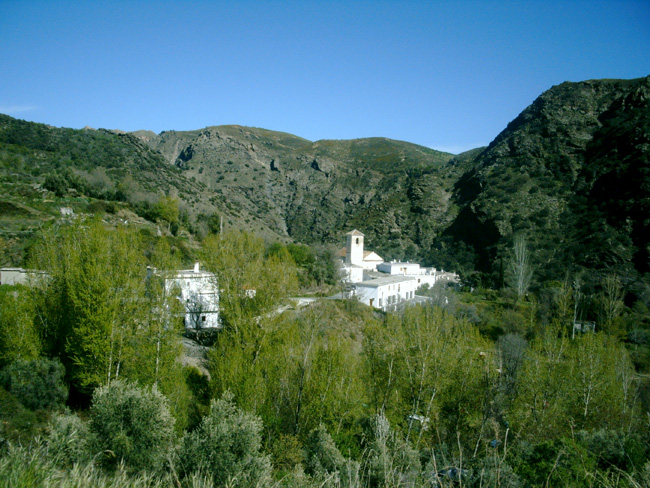
The standalone mountain and valley anchor between Granada and the coast: villages, acequias, orchards, local services, nature routes, slower stays, and community-rooted discovery.
Sevilla
Capital de Al-Ándalus · Puerta de América
The Phoenicians arrived in this area first, establishing a number of trade colonies by the river. They taught the locals how to work with iron and created a new way of processing gold. The Romans came next and founded the town of Hispalis a few hundred years BC. Hispalis grew into a beautiful and prosperous city, but it never managed to emerge from the shadow of nearby Córdoba, until the Visigoths transformed Hispalis into a provincial seat and a centre of learning. Transliterated as Ishbiliya in Arabic, Seville took on a particular significance after the Almowahiddin berber sultanate had extended from North Africa making it the most northern representation, mirroring their capital Marrakech, to the south.
Málaga
Costa del Sol · Ciudad de Museos
Málaga es la capital de la Costa del Sol. Cuna de Picasso, ciudad de museos, playas doradas y un casco histórico que respira pasado andalusí. 300 días de sol al año y una calidad de vida que atrae a todo el mundo.
Gibraltar
The Rock · British Overseas Territory · Gateway
Gibraltar is a place like no other — a British Overseas Territory perched at the southern tip of Europe, where English pubs sit alongside Spanish tapas bars, where Barbary macaques roam the limestone Rock, and where the Mediterranean meets the Atlantic. A mere 6.8 square kilometres packed with history, wildlife, and the best duty-free shopping in Europe.
Route Chapter
Morocco Arc
Cross the Strait and continue by rail, road, and medina rhythm from Tangier through the Rif, the imperial capitals, the Atlantic corridor, and Marrakech.
Tangier
Gateway to Africa · Strait of Gibraltar
Tangier has always been a crossroads — of continents, cultures, and centuries. From the Phoenicians to the Beat Generation, this port city has lured writers, artists, and wanderers with its luminous light, labyrinthine medina, and the constant whisper of two seas. Today it remains Morocco's most cosmopolitan gateway.
Chefchaouen
Blue Pearl · Rif Mountains · Andalusian Refuge
Chefchaouen is unlike any other city in Morocco. Every wall, every step, every alley is painted in shades of blue — from powder to cobalt to cerulean. Founded in 1471 by refugees from Al-Andalus, this mountain town has a peaceful energy that feels almost otherworldly. Wrapped in the misty Rif Mountains, Chaouen is a place to get lost in colour and calm.
Fes
Spiritual Capital · Oldest Medina
Fes is Morocco's most complete medieval city — a living museum where donkeys still outnumber cars in the labyrinthine alleys of Fes el-Bali. Founded in 789, it is home to the world's oldest university, the most spectacular tanneries, and a spiritual depth that has shaped Moroccan identity for twelve centuries. Fes doesn't show you history — it immerses you in it.
Meknes
Imperial City · UNESCO · Ismaili Capital
Meknes is the forgotten imperial city — the Versailles of Morocco, built by Sultan Moulay Ismail with the ambition to rival the greatest courts of Europe. Its massive walls, monumental gates, and vast granaries speak of a ruler who built an empire from the Atlantic to Timbuktu. Quiet, dignified, and rich with history, Meknes rewards the traveller who takes the road less travelled.
Rabat
Capital of Morocco · UNESCO Heritage
Rabat is Morocco's capital and its most underrated gem. A UNESCO World Heritage city where wide boulevards meet ancient kasbahs, where the Atlantic breeze sweeps through tranquil gardens, and where the Hassan Tower stands as a monument to ambition. It's the quiet heart of the kingdom — elegant, walkable, and effortlessly cool.
Casablanca
Economic Capital · Hassan II Mosque
Casablanca is not the city of the film — it's something bigger. Morocco's economic capital is a sprawling metropolis of Art Deco architecture, the breathtaking Hassan II Mosque, and a restless energy that defines modern Africa. It's chaotic, cosmopolitan, and utterly captivating. A city that rewards those who dive in.
Marrakech
Red City · Imperial City · UNESCO
Marrakech is the most intoxicating city in North Africa — a swirling kaleidoscope of colour, sound, and scent. From the snake charmers and storytellers of Jemaa el-Fna at dusk to the serene beauty of the Majorelle Garden, from labyrinthine souks to the snow-capped Atlas Mountains on the horizon, Marrakech is a city that seizes every sense and never lets go.
Route Chapter
Independent Extensions
Additional arrival and extension cities for travellers building wider Iberian journeys at their own pace while we deepen the local infrastructure of each page.
Barcelona
Capital de Cataluña · Modernismo · Mediterráneo
Barcelona es la capital del modernismo, la ciudad de Gaudí, de las Ramblas, del Barça y de una cultura cosmopolita única. Entre el Mediterráneo y la montaña de Montjuïc, respira creatividad, diseño y una energía que no se detiene.
Lisboa
Capital de Portugal · Cidade das Sete Colinas
Lisboa é a capital lusa, construída sobre sete colinas que miran al Atlántico. El fado, los pastéis de nata, la luz única del Estuario del Tajo y una energía creativa que la ha convertido en la capital tecnológica y cultural de la península ibérica.
Romance and Reality
The history of human relations is not black and white. In spite of evident antagonistic poles, and imperialist political interests, people base their affairs on personal relations, knowledge, economics, social bonds and honour codes — not so much on religious differences. The Visigoth kingdom that ruled Iberia before the arrival of Islam was itself a hybrid of Roman institutions, Germanic warrior culture, and a Christianity that had absorbed both. The reality of what followed — eight centuries of Muslim presence — is more nuanced, more human, and more instructive than either the romance or the polemic suggests.